PildoLabs Completes Successful 2025 Flight Trials Validating U-SCUAR Technologies
The U-SCUAR project was conceived to advance unmanned aircraft systems capable of meeting European UAS regulatory requirements and supporting operations in medium-risk SAIL III and IV scenarios under the SORA methodology. Recognised for its strategic and technological relevance, the project forms part of the Aeronautical Technology Programme (PTA) of the Spanish Ministry of Science and Innovation and is co-funded by CDTI through the European Recovery and Resilience Mechanism.
Within this initiative, PildoLabs plays a key role, focusing on enabling drone operators to access U-Space services and on providing enhanced layers of safety and situational awareness when operating in volumes where complete U-Space services are not available. The company leads the development of two main subsystems: an independent U-Space tracker device and a centralised server environment designed to integrate, analyse and monitor operational data.
After the completion of most core developments in 2024, PildoLabs has dedicated 2025 to testing and validating the system in real flight environments. Over the past months, the company has conducted a series of controlled flight trials to verify the performance and integration of all components developed under U-SCUAR.
The campaign involved equipping a drone with the PildoLabs tracker prototype, confirming its ability to support safe navigation in U-Space, supply accurate real-time information, and maintain reliable communication with the Central Server and the Ground Control Station. The trials also validated the backbone system developed by PildoLabs, which centralises data and provides tracking and conformance monitoring services.
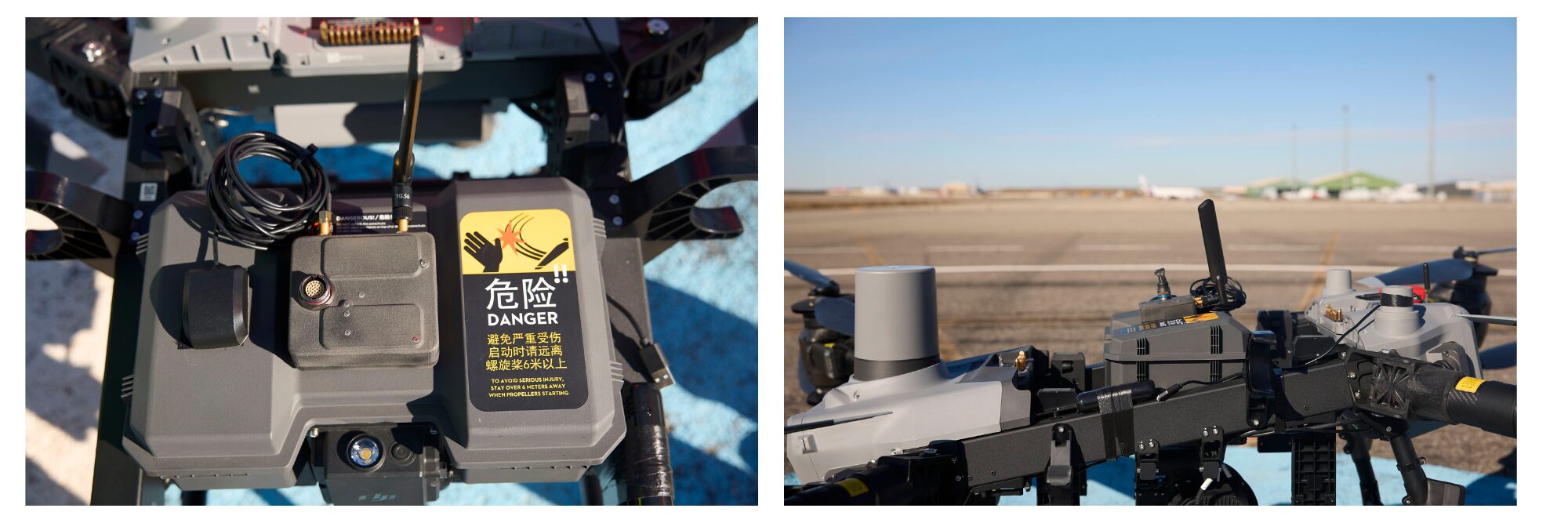
Beyond hardware validation, the company also tested several advanced software tools developed within the project, including:
· Procedure design tools for drone-specific navigation procedures;
· GNSS degradation monitoring tools capable of detecting real-time signal deterioration;
· Interference detection tools designed to identify jamming and spoofing events.
To thoroughly evaluate the GNSS-related functionalities, PildoLabs deployed a portable PildoBox near the drone operation area. This system provided reference data, helped record and characterise interference phenomena, and strengthened the robustness of the overall validation process.

The successful execution of the 2025 flight trials marks a major milestone for PildoLabs within the U-SCUAR initiative. This achievement is particularly significant as it confirms that PildoLabs has successfully completed the technological developments planned for the project, demonstrating the maturity and readiness of the solutions designed to enhance U-Space integration and support safe, efficient unmanned aircraft operations.

